
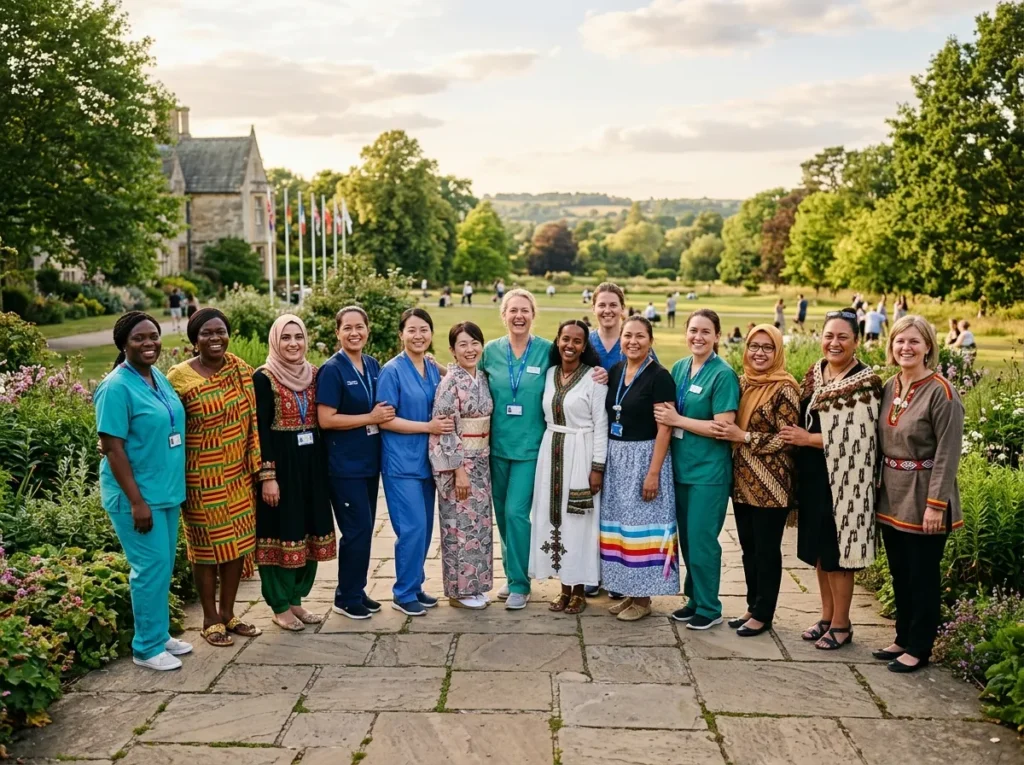
Every day, hundreds of women and newborns die from entirely preventable causes. Behind many of those preventable deaths is a single, devastating truth: there are simply not enough midwives in the world. The global midwife shortage has reached a critical point, and the international midwifery community is sounding the alarm louder than ever before.
As of 2026, research estimates that the world is short by approximately one million midwives. This is not just a staffing problem — it is a humanitarian crisis with consequences measured in lives lost, families shattered, and communities left without the care they desperately need. Understanding the scale of this shortage, why it exists, and what is being done about it has never been more urgent.
How Big Is the Global Midwife Shortage?
The numbers are staggering. New research commissioned by the International Confederation of Midwives (ICM) confirms a global shortfall of nearly one million midwives — a figure that represents the gap between the midwifery workforce that currently exists and the workforce needed to provide universal coverage of essential midwifery services worldwide.
A study published in ScienceDirect in early 2026 estimated the global midwife shortage at between 710,000 and 980,000, depending on available country data — meaning even the most conservative projections put the deficit close to three-quarters of a million practitioners. The shortage is not distributed evenly. The African region and low-resource settings in South Asia bear a disproportionate share of the burden, where the combination of rapid population growth and insufficient training infrastructure means the gap is not narrowing fast enough.
To put it plainly: the production of new midwife graduates in the most affected regions is barely keeping pace with increased need, let alone closing the existing gap.
What Is at Stake: The Human Cost
Midwives are not peripheral figures in maternal and newborn care — they are central to it. According to the World Health Organization, midwives can provide up to 90% of essential sexual, reproductive, maternal, newborn, and adolescent health services when fully educated, trained, and supported.
The ICM has made the life-saving potential of closing this gap unmistakably clear: with at least 900,000 more midwives, the world could prevent 67% of maternal deaths, 64% of newborn deaths, and 65% of stillbirths annually — potentially saving up to 4.3 million lives every year by 2035.
These are not abstract projections. They represent real mothers who survive childbirth. Real newborns who take their first breath safely. Real families who remain whole.
Why Midwifery Matters Beyond Birth
The impact of midwives extends well beyond the delivery room. Midwives provide continuity of care across the full reproductive health journey — from prenatal visits and health education to postnatal monitoring and family planning. In communities where physicians are scarce or inaccessible, midwives are often the only skilled healthcare provider a woman will ever see.
This breadth of care means that investing in midwifery is one of the most cost-effective health interventions available to any government or healthcare system. Yet despite the evidence, global investment in the midwifery workforce has remained chronically underfunded.
To understand more about the foundational impact midwives have on communities, read our post on Why Midwifery Matters: The Importance of Supporting Birth Workers.
Why Does the Shortage Exist?
The global midwife shortage is not the result of a single cause. It is the product of overlapping systemic failures that have been accumulating for decades.
Underinvestment in Education and Training
In many low- and middle-income countries, midwifery training programs are underfunded, under-resourced, or simply nonexistent at the scale required. Schools lack qualified instructors, simulation equipment, and clinical placement opportunities. This limits the pipeline of new graduates at the very source.
Poor Working Conditions and Retention
Even where midwives are trained, retaining them is a serious challenge. Across the globe — including in wealthier nations — midwives face demanding workloads, inadequate pay, limited career development opportunities, and insufficient institutional support. Burnout is widespread. Many leave the profession within the first few years of practice, and others migrate to countries with better conditions, further depleting the workforce in regions that need them most.
Lack of Professional Recognition
In some countries, midwifery is not recognized as a fully autonomous profession within the national health system. Midwives may work under restrictive supervision requirements or have a limited scope of practice, which undermines both recruitment and the profession’s ability to deliver the full range of care it is qualified to provide.
Gender and Structural Inequities

Because midwifery is a predominantly female profession, it is not immune to the broader inequities that affect women in the workforce — including wage gaps, limited leadership pathways, and undervaluation of care work. Addressing the midwife shortage requires confronting these systemic gender disparities head-on.
The “One Million More Midwives” Campaign
In October 2025, the ICM launched one of the most significant global advocacy campaigns in the history of midwifery: One Million More Midwives. The campaign calls on governments and global health leaders to grow, support, and sustain the midwifery workforce — and it is grounded in the urgent new evidence documenting the one-million-midwife gap.
The centerpiece of the campaign is a global petition, hosted at millionmore.org, which aims to collect one signature for every midwife the world urgently needs. The petition is available in seven languages and is open to anyone — midwives, healthcare professionals, families, students, and advocates worldwide.
Signatures gathered through the petition will be delivered directly to high-level policymakers at the 34th ICM Triennial Congress in Lisbon, Portugal, on June 18, 2026 — a pivotal moment for the profession to present a united, global call to action.
Why This Campaign Matters Now
The Lisbon Congress carries special significance. Under the theme One Million More Midwives, it is designed as a moment for midwives, associations, governments, and partners to align around concrete commitments — not just aspirations — to grow and sustain the global midwifery workforce. The ICM frames this not as a workforce issue alone, but as a matter of human rights, health equity, and the Sustainable Development Goals.
If you believe every woman deserves skilled midwifery care, adding your voice to this campaign is a direct and meaningful way to support that belief at the highest levels of global health policy.
What Solutions Are Being Proposed?
Solving a shortage of this magnitude requires action at multiple levels simultaneously — from international policy to community-level innovation.
Scaling Up Training Infrastructure
Expanding and improving midwifery education is the most fundamental lever. This means investing in training institutions, supporting faculty development, providing scholarships and stipends for students from underserved communities, and developing accelerated pathways for existing nurses and health workers to gain midwifery certification.
Improving Retention Through Better Conditions
Growing the workforce means nothing if midwives keep leaving it. Addressing burnout, improving compensation, creating clear career pathways, and ensuring safe working environments are essential retention strategies. This is as true in high-income countries as in low-resource settings.
Telehealth and Technology as Multipliers
Emerging models of care — including telemidwifery, mobile clinics, and AI-assisted monitoring tools — offer promising ways to extend the reach of existing midwives. By using technology to support remote consultations, real-time monitoring, and referral coordination, individual midwives can serve more families without being stretched beyond safe limits.
Community Midwifery Models
Training people from within their own communities to become midwives improves retention, builds cultural trust, and reduces the urban-rural care gap that plagues many countries. Community midwife programs that combine formal training with deep local embeddedness have shown strong results in diverse settings.
At Midwives for Midwives, strengthening locally grounded midwifery capacity has always been central to our mission. You can learn more about how we put this into practice through our Student Midwife Apprenticeship Program.
What You Can Do to Help Close the Gap
Closing a gap of one million midwives is a global challenge — but it is also one that individuals, organizations, and communities can contribute to in meaningful ways.
Sign the ICM Petition
Visit millionmore.org and add your signature to the One Million More Midwives campaign. Share it widely. Every signature is a message to world leaders that the midwifery workforce cannot wait.
Advocate in Your Own Community
Talk to your local representatives about midwifery policy. Support organizations that fund midwifery training in low-resource settings. Raise awareness about maternal health disparities in your networks. Advocacy at the local level is what builds the political will for change at the global level.
Support Midwifery Organizations
Organizations like Midwives for Midwives work at the intersection of training, advocacy, and community-based care. Supporting our mission — whether through volunteering, participating in our programs, or spreading the word — directly contributes to the goal of a world where every woman has access to a skilled midwife. Find out how to get involved here.
Encourage the Next Generation
If you know someone considering a healthcare career, encourage them to explore midwifery. The profession desperately needs passionate, skilled practitioners — and as our post on Career Pathways for Midwives shows, it also offers a rich and rewarding professional journey across many settings and specializations.
A Crisis That Cannot Wait
The global midwife shortage is one of the most urgent and solvable crises in global health. The evidence is clear. The solutions are known. What is needed now is political will, sustained investment, and a global community willing to demand better for the women and newborns whose lives depend on skilled midwifery care.
One million more midwives. One million more reasons to act — and to act now.
At Midwives for Midwives, we have always believed in the power of the midwifery model to transform lives. The world needs more midwives, better supported, properly resourced, and fully recognized. Together, we can help make that a reality. Learn more about our vision and the work we do on our Vision, Mission, and Purpose page.